 TalkChinese AI
Social Chinese
Handle a small mistake politely in Chinese.
A quick, natural apology helps when you bump into someone, arrive late, misunderstand something, or need a moment to figure things out.
Practice this social chinese conversation in the app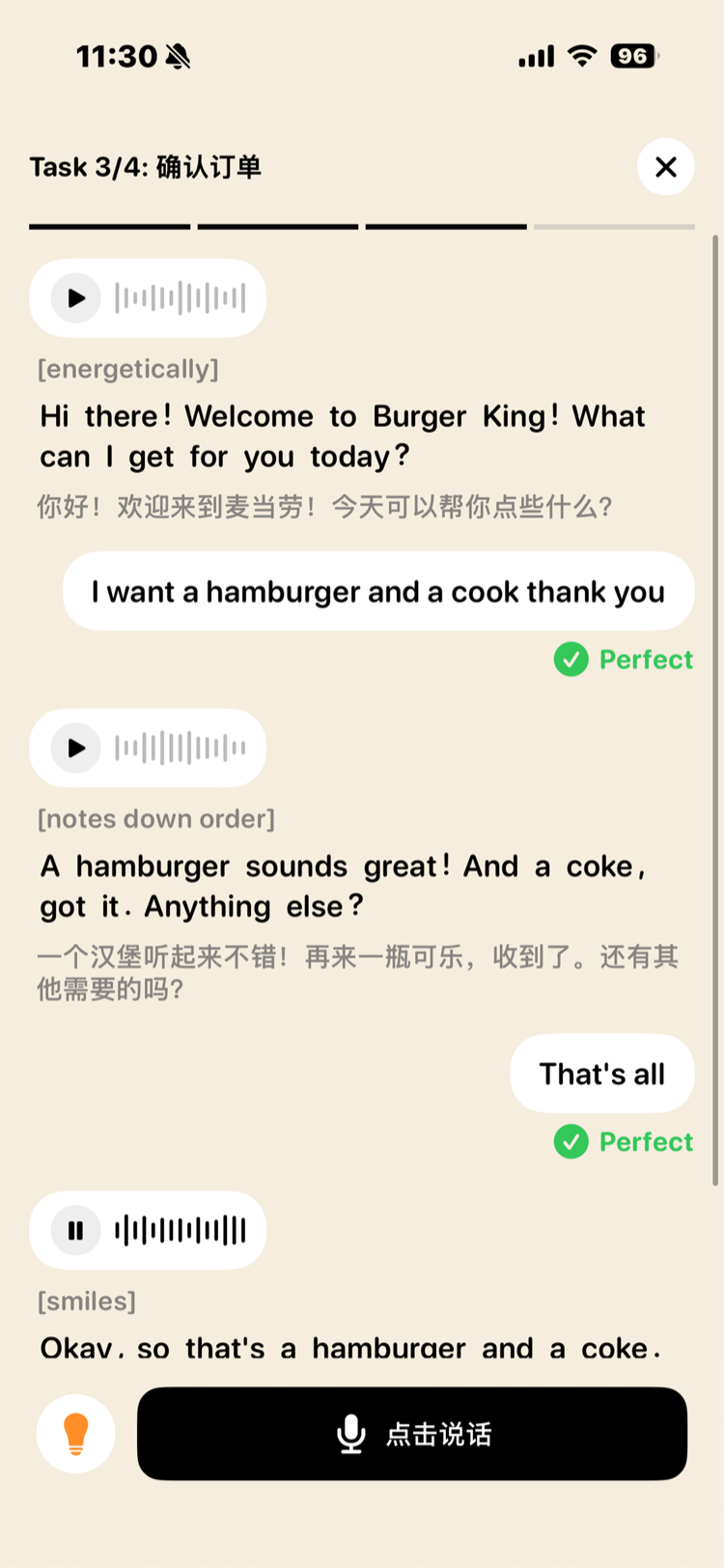
Words to use when this really happens
Say sorry
不好意思 (bù hǎo yì si) means “Sorry” or “excuse me.”
Apologize more directly
对不起 (duì bu qǐ) means “I am sorry.”
Ask for patience
麻烦您等一下 (má fan nín děng yí xià) means “Please wait a moment.”
Turn phrases into replies
Practice the social chinese moment before you are in it.
In TalkChinese AI, you respond out loud, hear a natural follow-up, and try again. That is how a phrase becomes something you can actually say.
- Practice this turnSay sorry
- Practice this turnApologize more directly
- Practice this turnAsk for patience
请再说一遍
qǐng zài shuō yí biàn — “Please say that again.” One reliable sentence gives you room to listen, think, and keep going.
Questions people ask
When should I use 不好意思?
Use it for everyday small apologies, getting someone’s attention, or asking for help.
Is 对不起 stronger?
Yes. It is a more direct apology and fits when you feel you made a clearer mistake.
Ready to say it, not just read it?
Download TalkChinese AI and rehearse this exact type of conversation out loud before you need it.
Practice social chinese in the app